Sunday, August 31, 2008

The Face of AIDS and the Insanity of Bureaucracy

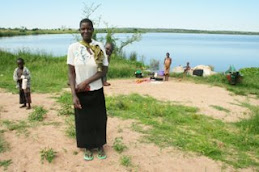
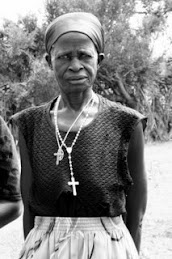
This is a story that will be hard to believe but I promise you, it’s all true. One day, while working in the clinic, a man appeared at the door carrying a frail woman in his arms. She looked elderly but was in fact only 26. She was tall and so thin that we could see every bone. Her eyes were sunken into her head but still, she had a tiny spark of life in her luminous eyes. In East Africa such devastating disease is likely to be caused by one or two infections- AIDS and TB. This unfortunate woman had both.

As her story was revealed to us we were appalled and yet doubtful that it could be true. Here is what the husband told us…

His 26 year old wife was admitted to a hospital in Migori that I’ll refer to as “St. Elsewhere” with AIDS and tuberculosis. She was started on the intensive phase of TB medications which were to be continued for 2 months. Then she would take the second phase of medications for another 4-6 months. The TB meds were started in the hospital and given for one week. Then she was prepared for discharge.

It was at this point that things went awry. The family was unable to pay her hospital bill so the patient was “discharged into the hospital”. This means that she was discharged from care but kept in the hospital until her family could pay her bill. Sounds a lot like she’s being kept a hostage, doesn’t it?

Because she was no longer an official patient she didn’t receive any care or medications- including her meds for TB. I should add here that TB meds and ARV drugs for AIDS are free to facilities. That’s right. St. Elsewhere gets the TB meds for free but wouldn’t dispense them to her because she was “no longer a patient”. It gets worse (if that’s possible). These patients are not fed unless there is food left over after the “real” patients are served their meals. A couple days before she came into our clinic, and 3 months after she was “discharged”, her family was finally able to pay her ransom…er, I mean her bill and she was able to go home.

In the subsequent days and weeks, we were able to follow the paper trail that confirmed her story and the atrocious “care” given at St. Elsewhere. We’ve talked to many people including a man who monitors TB care for the Kenya Ministry of Health in our district. He was “shocked” and unaware of St. Elsewhere’s policy but claimed he would look into it. As for the patient, she struggled to survive for another few weeks before succumbing to the diseases, another victim of the scourges of HIV, TB and Poverty.

Saturday, August 16, 2008

African Portraits


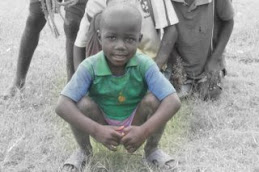
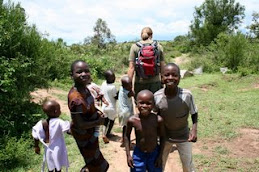
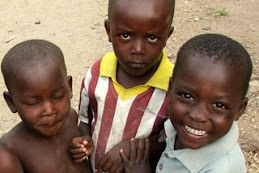
This week I'll let my photographs of the beautiful African children speak for me. They were all taken within a couple kilometers from our house. The children are open, warm, curious, playful, and sometimes fearful of me or my camera. They love to hold my hands as the first picture illustrates. The best fun begins when I show them their photo. They all laugh loudly and then chatter to each other. Yesterday each child wanted a portrait by him or herself. So, my short walk to stretch my legs at the end of the day took 90 minutes. It was the most fun I've had all week. There's something so spiritual and joyful about being in their midst.


Sunday, July 27, 2008

Through the windshield

So often when Paul and I are traveling around the countryside we wish aloud that you were all with us. So, when we drove to Kisii for groceries on the 17th I decided to take photos through the windshield so you could see this part of Africa through our eyes.
The road from Matoso to Migori is a rutted dirt road but once you leave Migori the road is paved and in fairly good shape which is an anomaly for this part of Africa. Within a few kilometers you begin to see verdant hills planted with sugar cane or banana trees.

The road is a narrow 2 lane which is shared by people on bikes or walking with heavy loads or school children in their matching uniforms.


The most awe inspiring and fear provoking sight are the trucks carrying impossible loads which take up 2/3 of the road. I'm often left chewing on my nails by the time we get past them. You probably read about the small vans known as matatas that we've seen carrying 20 plus 2-5 men hanging outside or onto the back. They fly by us driving in excess of 90 KPH.

You can tell you're getting close to Kisii because the side of the road fills with vendors with all sorts of things for sale. There's produce, luggage, second hand clothes from the US, live animals like hens and lambs, shoes, kitchenware and more.


Kisii itself is a small city with an ever expanding population. Every street is jammed with traffic and pedestrians. Usually when we're sitting at a standstill, people will come over to sell us something or to talk to us. It's all part of the entertainment and keeps us from getting too frustrated by the slowness or our progress.


The round trip takes 5 hours of driving and we allot another 2-3 hours for all the errands and shopping we usually have to do. By the time we get home in the evening, we are covered in red dust, are tired and thirsty and happy to be back in our little village. Sitting on the porch at night, watching the sun set over Lake Victoria we thank our lucky stars that we don't have to drive there more than once a month let alone live there. It was nice to have you along for the ride and hope you enjoyed the journey. You'll never look at grocery shopping quite the same way again.

Sunday, July 20, 2008

The Magnificent Masai Mara

The Masai Mara, or simply the Mara as the locals refer to it, is the most popular national reserve in Kenya. It’s the northern most part of the Serengeti and hundreds of thousands of game animals roam the plains. And the best part? The Mara is a short 3 hour drive away from our village on Lake Victoria.

Paul and I have been anxious to take a break from work and visit the Mara and our chance came over the July 4th weekend. We arranged with our Project Director to borrow an ambulance which we packed with provisions, a coal burning cook stove, a cooler and REI tent left by previous volunteers. Our plan was to camp near the Oloololo Gate on the western side of the park and to check out the resorts for our next trip.

When we arrived late Friday, we found that we were the only ones registered to camp there. The camping area is actually inside the park so animals are free to graze in the area. We were assured that it’s safe to sleep in a tent and none of the animals would bother us but not to go out walking inside the park. We were also warned not to leave the vehicle when driving.

So, with those assurances and warnings we set up camp and went for a late day game drive. We immediately saw warthogs which crossed the road in front of us then disappeared into the tall savannah grass. Then we spotted a large herd of elephants coming toward the road. We stopped the vehicle on the road and waited for them to cross. There were many large adults, several yearlings and one that looked to be a newborn.

Here’s me breaking rule #1- I quickly regained my senses and got back in the vehicle.

After another hour of spotting animals we headed back to our camp just as dark ominous clouds in the east let loose with heavy rains. By the time we got back to camp our tent and the pads we planned to sleep on were drenched. The tent apparently isn’t waterproof so we went with Plan B- sleeping in the ambulance. By the time we got set up and made a quick dinner it was nearly dark. We looked through the foggy windshield and saw what looked like a dark mass moving toward us. We hastily wiped off the windows and could see through the sheets of rain a large bull elephant grazing nearby. It continued on through the camp grounds, walking within about 10 yards of our vehicle but paying no attention to our intrusion.

Around July or August every year millions of wildebeests migrate from the Serengeti to the northern grasslands of the Mara. The timing of the crossing is based in part on how much rain the southern Serengeti gets during the big rainy season. The park rangers keep a close eye out for the first wildebeests to cross and then spread the word to all the resorts. This year the first wildebeests started to cross on July 3rd- the day before our arrival. They always make the crossing at the same places along the Mara River where huge Nile crocodiles are lying in wait. Of the first group to cross, many drown when the river is high and those who follow cross on the “bridge” made up of their bodies.
The rangers told us that last year they had very heavy rains before the migration season so the river was running very high. They estimate that about 5000 wildebeests died during the crossing.

On Saturday we hired a ranger as our guide for the full day. We picked him up at 8 AM and headed into the bush in search of the more elusive animals including the black rhino. They were hunted nearly to extinction by poachers who get a fortune for each horn. There are only about 30 left in the Mara so they’re very hard to see. He took us down along the river, through heavy vegetation where we saw hundreds of baboons, zebras, warthogs, hippos, crocs and giraffes- but no rhinos. One of our favorite sights of the day was that of giraffes running on the savannah. They’re elegant, graceful and yet gawky at the same time. We also spotted a pair of lionesses with their cubs sleeping in the bush.

Late in the morning we saw a flock of large birds that turned out to be dozens of White-backed vultures eating the carcass of a warthog. They are often the first to arrive after the hyenas eat their fill. We read that a large group of White-backed vultures can eat an impala in 10 minutes. The very scary looking Lappet-faced vulture arrived later and was large enough to scare off the other vultures- at least for awhile. It was a sight right out of National Geographic.

We drove to the Mara River near the Tanzania border to look at one of the traditional migration spots. We could see thousands of wildebeests and zebras grazing on the other side, preparing to cross. Throughout the day we were constantly amazed as the animals and vegetation of the Mara revealed itself. Our ranger laughed at our frequent joyful outbursts when we spotted something new. “You have never seen a giraffe run before?” he asked us.At one stop I spotted a lizard with remarkably vivid colors which to his amazement and amusement I stopped to photograph. People who live around such beauty and diversity in their daily lives often lose sight of how miraculous their world is.

Our day ended with a beautiful sunset and a hot meal around the campfire. We lay awake listening to the night sounds of the Mara and woke with the sunrise. It was another glorious day and as we got a fire going for coffee we noticed a couple of tourist vehicles entering the park and stopping about ¼ mile away from us. They stayed there long enough to make us curious. We packed up and drove over to find a large male lion lying under a tree and another in the tall grass. We turned off the engine and just watched for about 15 minutes. Then one got up and went over to the buffalo they must have killed the previous night. He turned it over and began to feed on it again. We were far enough away to allow it to eat unhindered but close enough to hear crunching of bones. Once it got it’s fill it went back for a nap. We drove over to the tree once more and just as approached it I realized the second lion was hidden in the tall grass a few short feet from our vehicle. I whispered urgently to Paul to “Back up! Back Up!” I could feel my heart pounding with a mixture of fear and exhilaration at our proximity to that magnificent creature. That morning was the high point of a trip that had many wonderful moments.

Our final stop was a planned visit at a Masai village outside the park. We picked up our ranger at the appointed time and drove the short distance to their village. The chief welcomed us and talked to us about their culture. They live in communities of about 50 families and marry only other Masai, although from a different community. They were traditionally nomadic herders and their cattle are still a big part of their culture. Their homes are made of cow dung and they eat only cow’s milk, meat and blood. Some of the women greeted us with a song during which I was invited to stand with them. I felt their song resonate in my chest and it filled me with a sense of joy (which is why I look so goofy in this photo). Some of you old timers will remember Granny Clampett from the “Beverly Hillbillies” singing “I got joy, joy, joy, joy down in my heart” while cooking up a batch of her moonshine. I must say, that captures the moment for me.

I'll leave you with a couple more photos from the Masai village. Safe journeys!


Thursday, July 10, 2008

A week in the life

Sometimes the week goes by so fast that on Friday I have a hard time remembering Monday. This was one of those weeks but somehow I jotted down a few notes so when I’m home in Denver next year I won’t completely forget this amazing experience.

Monday: We’re off to a fast week. Paul’s spending the whole day with our community volunteers. There are about 40 of them and they live in all the surrounding villages and help the PSC (HIV clinic) track people who have dropped out of sight. If anyone misses their TB meds for 2 days or their HIV medications for 5 or more days they are put of the list and targeted by our volunteer from their area. At the beginning of June, there were about 47 people on the list but by the end of June, only 8 remained. The shift in the tide came when Paul began using text messages to contact the CHVs as soon as someone in their community missed a follow up. We never would have imagined that people living in rural East Africa would carry cell phones but many do. They don't have electricity or running water but they have cell phones. It makes sense when you think of it. People who are homeless in America do the same thing. It gives you some point of contact with the outside world.

Paul gave a talk on the history of HIV in Kenya and answered many tough questions which reflected how well these lay people understand the disease. They were shocked to hear the number of people in their area who are or may be infected. They're proud to represent their village and be part of the fight against HIV but they always ask for something tangible. And what they usually get is lots of love and appreciation from us. Today Paul was able to hand out bags with the Lalmba logo which I hear were a big hit.

Tuesday: I am doing a test run of a new data collection system that if it works, may reduce the oppressive amount of paperwork and data collection that needs to be done and reported to MOH (Ministry of Health) every month. It’s tedious but not necessarily boring work. It calls for me to sit in our registration room with Ochieng, filling out forms and taking payment, getting temperatures and weights- and I learn many things:

People who have never seen a bathroom scale often step on sideways or backwards. Many adults try to stand on the dial and one woman kneeled on it.

Thermometers are frightening things when they’re being aimed at your armpit by a Mzungu.

Feet that have never worn shoes are rounder, with toes that are short and splayed.

We have patients who are named Fidel Castro, George Bush, Holy Canaan, Ket Winslet, Jacklin Kenedy, Eunick, Saline, Stalin, Viva and Pissy.

The clinic gives a LOT of free care to kids who have lost one or both parents to AIDS.

Lots of kids as young as 7 come to the clinic alone. Most don't know their own age. They haven't had an adult in their life to keep track of that information. We estimate their age and put it on their record. I wonder if they will now go through life using our guess as their age.

And Ochieng is unflappable. He laughs his way through the day and on this day I join him. His understanding of English spoken with an American accent is marginal so no matter what I ask him, he responds “fine, fine”. I end my day wishing I had volunteered to be a registrar rather than medical director.

Wednesday: It’s our busiest day in the clinic and there are many sick people to attend to. We transport 2 people to the hospital in the first couple hours. Both are severely anemic. The man is passing blood, the child has severe malaria. Both will need transfusions as their hemoglobin counts are down to 1/3 the normal level. A woman has a large facial laceration that just missed her eye. Her jealous neighbor suspected her of being with her husband so cut her with a panga. A teen comes in with a septic wound and swelling to his knee. He delayed coming in because he didn’t have the fee. Today he doesn’t either so we cover it for him. The people keep coming until we’ve seen over 100 patients- a typical Wednesday.

We have a tremendous thunderstorm that starts around 7 PM and rages for 90 minutes or so. There are claps of thunder that are like sonic booms and one strike sounds like it hit something right outside our house.

Midnight: We’re awoken by the guard calling our names through the window. The clinician on- call sent him to get me to come and assist her in the clinic. I throw on a skirt and am there in less than 5 minutes. I find the building in darkness and the clinician attending 3 patients in the observation room using the light of a kerosene lamp. The lightening has taken out the electricity and the lamp gives the room an eerie glow.

The first person she asks me to see was a woman who was hit by lightening during the earlier storm. She has no signs of life and has been dead long enough for the body to be cold. I am confused for a moment, wondering why she called me for such a clear cut situation. Did she feel better having me pronounce the patient dead? I will have to ask her later. I concur that there’s nothing further that can be done and she informs the family. The men immediately lift the body over their heads and run out into the night with the women wailing behind them. It happens so fast and I am still half asleep so for a second I just stand there and let my brain catch up. Then we move on to the second patient.

She too was hit by lightening but has only minor burns and is otherwise stable. She will stay through the night with her family observing her.

The third patient was bit by a snake earlier in the evening and was brought to the clinic in the rainstorm sitting on the back of a bike. The bite is on the ankle and above it are multiple deep lacerations that were made by a panga by someone in the family who was trying to help. This is one of the traditional treatments for snake bites meant to “bleed the poison out”. The lacerations look far more ominous than the original bite. The clinician has already started an IV to administer the anti-venom, given IV antibiotics, a steroid and a tetanus toxoid. The man has been drinking but is fairly cooperative so once he’s stabilized we leave him to his family’s care. We’ll be called if anything changes.
Thursday: I start by checking on our patients. The woman who had minor burns from the lightening strike slept well and is feeling ready to go home. The leg of the man with the snake bite is looking worse. It’s more swollen, tender, and red and the panga cuts have continued to ooze. Now that it’s light, we are able to transfer him to the hospital and we begin to make arrangements. But then a snag. The family isn’t sure they can get the money and wonder if they can take care of him at home. How often people here (and in the US) make health care choices based on money or lack thereof. After much back and forth discussion, we agree to continue to treat here while they work on finding money but warn them not to delay. They can also bring a bike for collateral and Lalmba with advance them the funds. We try to impress on them the urgency of the situation.

By then, the mobile team is packed and ready to leave the compound for Saume which is near the Tanzania border. We stopped first to pick up immunizations and run into problems. The government clinic in Muhuru decides they’re no longer going to give us any immunizations because we’re “stealing all their patients”. This is typical of the bureaucratic BS they are well known for. Our mobile team goes to that site specifically at their request because they were unable to reach the families in the remote region near the border. Now this. Even reasonable Chacha can’t change their minds so while we set up and start to see antenatal moms, Chacha heads back to Matoso to get some of our immunizations. I make a note to schedule an appointment to meet with the MOH people about the immunization problem.

When I get out of the vehicle the school children see me and begin an excited surge toward me. Imagine 100+ kids all running at you, yelling, waving, smiling…it’s bliss. Heaven on earth. I make another mental note to borrow a video camera to record this to watch when I am home and missing them. They’re comfortable enough with me that this time they do something different. Some of them start feeling my arms like blind kids reading Braille. They pinch my elbow skin, turn over my hands and giggle about my nails. It feels nice to have their soft little hands on me.

When Chacha returns with the vaccines, he and I leave the team in Saume and continue on to Lalmba’s remote clinic in Ochuna. We spend a couple hours there with the staff to support and mentor them. I reviewed the antenatal records for the last 4 months and find that 15% of the moms test HIV+. That’s a sobering statistic.

By the time we’re back in the car and heading to Saume to pick up the team it’s late afternoon and we haven’t eaten. We stop in the last little village at the very southern tip of Kenya and sit outside on a dusty road to drink a soda. We watch wordlessly as kids, dogs, cows, motorcycles, and bikes roll by kicking up the red dust.

We arrive back at the clinic after business hours so the compound is quiet. Paul and I are leaving in the morning to go to the Masai Mara and now that the work week is over, we can pack up the ambulance so we can get an early start. Maybe a beer or my latest favorite drink- vodka and Crystal Light- would taste good right now.

Friday 4th July: Happy Independence Day America! We sure miss you. But not today because, did I mention???, we’re going to the Mara! I’ll write about that later. I’m having too much fun to journal right now.

Monday: Back at work we find sobering news waiting for us. The man with the snake bite was transferred to the hospital on Thursday but died that same night.

And the wife of a staff member went into early labor and delivered twins- one boy and one girl- whom they named Paul and Darcie. The home birth was assisted by a grandmother who didn’t know how to properly tie the umbilical cord and Darcie lost a lot of blood. They transported the mom and babies to the hospital but were unable to save baby Darcie. I felt such sadness at the loss of the little baby who bore my name for a few hours. We immediately offered our condolences to the father, our co-worker. He told us that that is the way life is and they will rejoice that they have a baby son. That’s life in Africa.

And so one week ends and another begins. We miss you all and will write next week about the beautiful Masai Mara.

Saturday, June 21, 2008

The Big Rainy


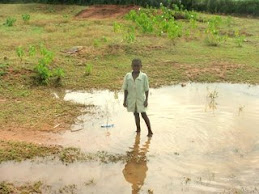
When we first got to Kenya, the season they call “the big rainy” was just starting. Within weeks everything living seemed to rejoice in the rebirth of spring. Wild flowers popped out in the fields and tadpoles were in every puddle. The birds went into a frenzy of nest building and mating rituals. And boys built toy sailboats to float in the new ponds that seemed to be everywhere.

After 2 months of sporadic and occasionally torrential rains it all came to a halt as suddenly as it started. On May 18th I took a picture of a late afternoon rainfall that ended up being the last for the season.

The hills are just starting to get brown around the edges and show signs of stress from the constant sunshine.

The vegetable crops are being harvested and we’re enjoying the bounty of our neighbors, the Tuckers. They send us their overflow cucumbers, peppers, butternut squash, okra and greens which we’re very happy to receive and share. Last week we were lucky enough to get a watermelon. It was late afternoon and the guys on the landscaping and maintenance crew had been working in the sun all day. Our cook and I called them over and cut thick slices for everyone. We stood out back enjoying its juicy sweetness and seeing who could spit seeds farthest. Can you think of a better way to end the work day?

Queen for a Day


On Wednesday the mobile medical team went to the village of Tulu. There’s a primary school close to the church where we were planning to set up our operation. As soon as I climbed out of the ambulance the kids came running.


I must have a huge ego because I never get tired of being treated like a celebrity. Kids swarm around to shake my hand and have their picture taken with me. Believe me, it’s hard to break away when it’s time to get to work.

We saw about 65 babies and toddlers over the next 4-5 hours and when it was time to pack up to leave I decided to walk home to stretch my legs and get some exercise. The Africans laugh at us when we walk just for exercise because of course they get so much exercise just going through their normal day. They’re only too happy to accept a ride back to the clinic. Tulu is a “short” walk from Matoso by African standards. It usually takes only 20 minutes to drive there and about 60-75 minutes to walk it.

I started off across an open plain and immediately heard kids yelling to me.

A group of kids were running full speed toward me and I ask you- who could walk away from that?

So I stopped and waited for them, worked the crowd, took the requisite photos and waved goodbye.


They ran back
across the field waving the whole way and I started off toward home again with a big grin on my face.


Because it was after 3PM, people were taking their afternoon bath, or heading home from school or work.


As the path began a slight climb toward the dirt road a group of girls in their school uniforms greeted me. Each was carrying a large container of water on her head which is likely a part of their daily chores.


I'll leave you with this one image which was my favorite of the day. And by the way, with all the stops to talk to people along the way, took me a full 2 hours to make it home. Worth every minute too.

The One That Got Away

One of our co-workers invited Paul and I to go out on the lake early one Saturday for a morning of fishing. Paul didn’t attract any attention carrying a long fishing pole and wearing a big cowboy hat. Yeah, right. It was pandemonium and it didn’t let up when we got out on the boat.


Other men who were fishing paddled over to check out his gear and see what bait he was using. After an hour or so they tired of us and went back to their own fishing.

Our guide’s little brother manned the anchor which was a rock weighing as much as he did. Although the size of a 10 year old, at 15 years old he’s already a strong and seasoned fisherman. In spite of that, he and his brother caught only a couple small fish.


The great white fisherman got totally skunked which prompted his brother Rich to promise to send “stink bait” from CO. I hope the fishermen among our readers understand the meaning of that. As for me, these photos were my catch of the day. My camera never lets me down and it’s always better than baiting a hook.